This workshop brought together experts, practitioners, and policymakers from Europe to explore how we can accelerate the protection and restoration of marine ecosystems. Among the participants, six projects from the MPA Community Network stood out, showcasing their work, sharing insights, and engaging in vital discussions about how to meet the EU’s ambitious goals for marine protected areas (MPAs) by 2030.
These six projects — BLUE4ALL, EFFECTIVE, BLUECONNECT, PROTECTBALTIC, SEAMPHONI, and MPA Europe — each brought their unique perspectives and solutions to the table. Together, they are shaping the future of marine protection across the EU.
BLUE4ALL: Co-Creating Resilient MPA Networks
Rita Trabulo from the Royal Belgian Institute of Natural Sciences kicked off the workshop by presenting the BLUE4ALL project’s blueprint for co‑creating effective and resilient MPA networks. The Blueprint Platform, which will be hosted in the MPA Community Network website, aims to facilitate the co‑creation of MPA solutions by offering a space where stakeholders can access a variety of tools, including those related to ecosystem health, restoration, community engagement, MPA financing, and more. Some of the key features that are currently being developed, include:
- Enhanced Search and Filter Options: New features are being developed to improve the user experience, including the introduction of favourites and a search bar. The tool filtering system will also be refined to prioritize the most relevant categories, making it easier for users to navigate and find the tools they need.
- User Profiles and Feedback: The platform will allow users to create profiles, provide feedback, and engage with the community through a feedback system with categories such as bug reports, new features, and UI/UX improvements.
- Tool Cataloguing: The platform will feature a catalog of tools essential for MPA management, with detailed descriptions and context for each tool. At the moment, 18 tools have been catalogued, and more will be added as the platform evolves.
A key element of the Blueprint Platform is its focus on community feedback. Blue4All emphasized the importance of continuous improvement through user input.
Blue4All’s Blueprint Platform is set to become a cornerstone for the future of MPA networks. By fostering collaboration and knowledge sharing, it will empower stakeholders to work together towards the EU’s ambitious marine protection goals. As the platform continues to evolve, it holds great promise for improving the effectiveness and efficiency of MPAs across Europe.
EFFECTIVE: Bridging Social and Economic Impact in Mediterranean MPAs
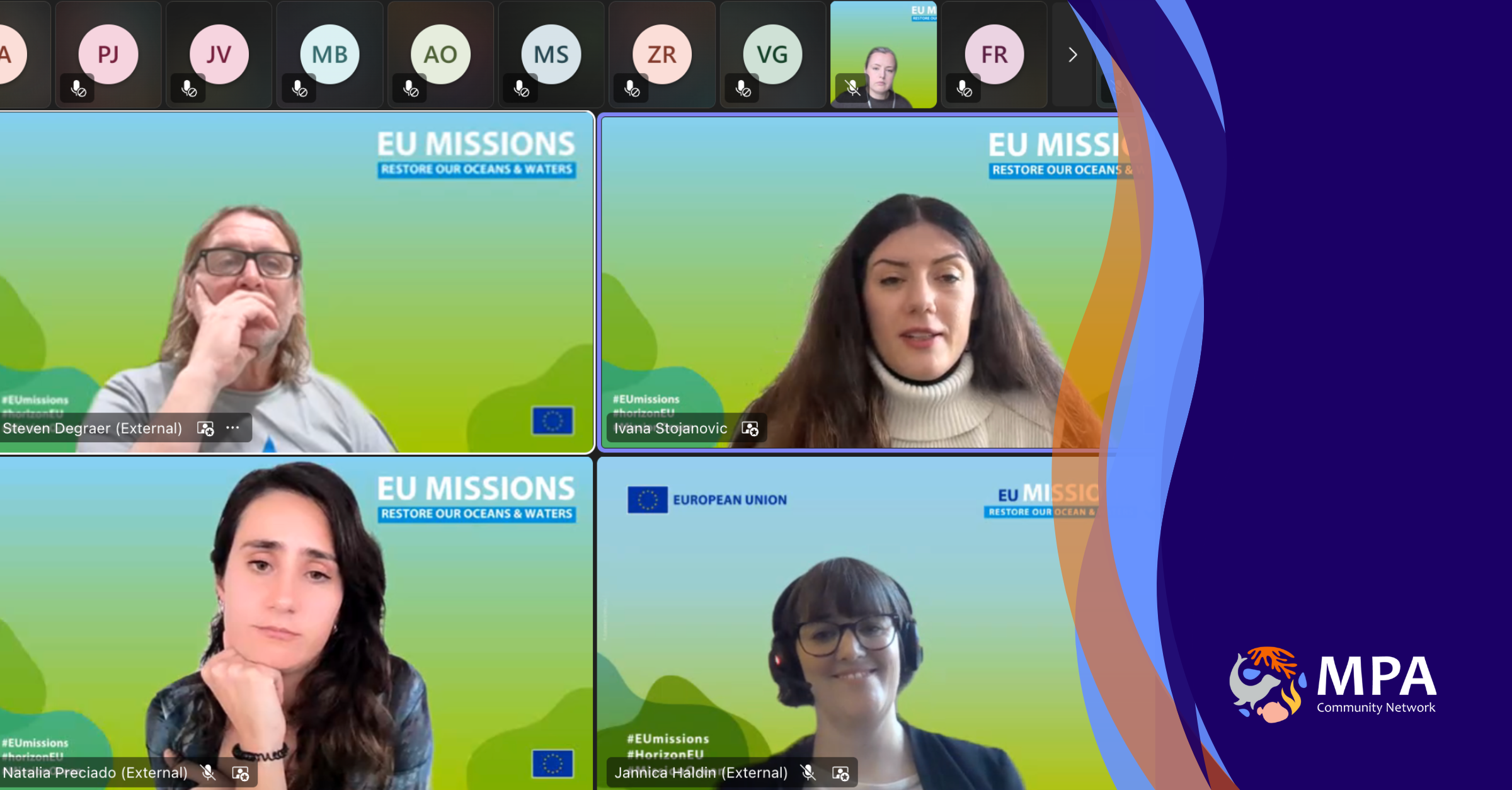
Natalia Preciado from the EFFECTIVE project presented the innovative approach to enhancing the social and economic prosperity of Mediterranean Marine Protected Areas (MPAs) through improved management and restoration practices. The project focuses on integrating Ecosystem-Based Management Systems (EBMS) across four Mediterranean pilot sites: Mar de l’Empordà, Ebro Delta, Northern Sardinia, and Cavo Greco. By blending nature-based solutions with digital tools, such as the “Digital Twin” for monitoring and the COSEA citizen science app, EFFECTIVE is enabling local communities and stakeholders to actively engage in marine conservation. The discussion during the workshop highlighted the importance of stakeholder participation and socio-economic benefits when designing MPAs, with a focus on restoring marine ecosystems while supporting local livelihoods. The project also addresses key challenges in MPA governance, focusing on legislation gaps and how digital technologies can aid in decision-making processes and the enforcement of management measures. The session was a timely reflection on the need for MPAs to be more than just ecological hotspots but also pillars of sustainable local economies.
BLUECONNECT: Strict Protection and Co-Management of MPAs
Ivana Stojanovic from the SUBMARINER Network shared insights from the BLUECONNECT project, which focuses on the strict protection, restoration, and co‑management of MPAs. The project highlights the importance of combining scientific research with community and stakeholder engagement to create effective protection zones. The project employs a hybrid interdisciplinary modelling framework to manage environmental pressures and mainstream connectivity analysis. BLUECONNECT works closely with regional and site-specific stakeholders to co-define and implement conservation measures, monitor MPA outcomes, and engage with local communities in the process. The project is actively working in demo sites across Europe, contributing to the development of scalable and transferable solutions for marine conservation.
The project is also committed to ensuring that its methods and tools are compatible with EU data and knowledge platforms, amplifying its impact on regional and international marine conservation efforts. BLUECONNECT’s status is progressing towards the realization of its ambitious goals, with expected outcomes including improved MPA effectiveness, advanced monitoring and assessment tools, and enhanced stakeholder cooperation. The project aims to contribute to strengthening EU leadership in international biodiversity conservation and driving innovative approaches that integrate local community perspectives in marine management.
PROTECTBALTIC: Resilient Protection for the Baltic Sea
Jannica Haldin from HELCOM presented PROTECTBALTIC, a project focused on enhancing the resilience of marine ecosystems in the Baltic Sea through effective protection and restoration measures. The project highlights the importance of regional cooperation and governance in addressing the specific challenges faced by the Baltic Sea, such as pollution and habitat loss.
The project focuses on developing a Protection Optimization Framework that integrates data-driven, science-based decision-making tools to support marine spatial planning, protection, and restoration across the region. By working closely with Baltic Sea countries, PROTECT BALTIC ensures that conservation efforts are guided by sound ecological principles and adapted to the unique characteristics of the Baltic Sea.
In the presentation, the team highlighted the project’s multi-faceted approach, including comprehensive ecosystem service assessments, ecological coherence studies, and adaptive management strategies. Through a series of work packages, PROTECT BALTIC is addressing key challenges in governance, monitoring, restoration, and legislation, aiming to build a coherent, well-connected MPA network. The project emphasizes that effective MPA management goes beyond designation, aiming to deliver real ecological benefits that safeguard biodiversity and support the resilience of marine ecosystems.
SEAMPHONI: Revolutionizing Monitoring for Offshore MPAs
At the 5th EU Blue Parks Workshop, Mariana Mata Lara from the SUBMARINER Network presented the SEAMPHONI project, which aims to provide a novel and integrated system for mapping, monitoring, and managing offshore marine areas and newly identified MPAs. The project focuses on developing Intelligent Marine Digital Twins (IMDTs) for six demo sites, enabling more effective conservation through advanced monitoring techniques such as eDNA, acoustics, and imaging. SEAMPHONI also integrates social life-cycle assessments to ensure that conservation solutions are sustainable and economically viable.
One of the key elements of SEAMPHONI’s approach is its emphasis on interoperability, connecting with EU infrastructures such as EDTO, EOSC, and Copernicus. The project also works on business models for industries like fisheries, offshore renewables, and shipping, ensuring that blue economy actors and authorities are equipped with the tools and knowledge necessary to manage marine resources sustainably. Through site-based blueprints, tailored management plans, and the deployment of mobile/web apps with over 20 data sources, SEAMPHONI is creating a robust framework to support offshore MPA management and improve marine biodiversity monitoring at scale.
The presentation highlighted how SEAMPHONI contributes to the EU’s 30×30 target by identifying priority offshore areas and ecological corridors and supports the 10% strict protection goal through the use of enforcement tools like a noise early-warning system and vessel tracking. By leveraging innovative technologies and cross-sector collaboration, SEAMPHONI is set to strengthen EU leadership in marine protection and policy alignment.
MPA Europe: Building a Coherent MPA Network Across European Seas
Mark Costello from Nord University presented MPA Europe, a project dedicated to identifying and mapping the optimal locations for MPAs across European seas. By using data-driven models, the project integrates information on biodiversity, species and habitat layers, connectivity, and blue carbon to inform the design of a coherent MPA network.
The presentation highlighted how MPA Europe will apply systematic conservation planning software to evaluate alternative MPA network scenarios, provide results via an online atlas and support marine spatial planning by showing where MPAs can deliver the greatest biodiversity and carbon‑storage benefits.
Stakeholder engagement and transparency were also central themes: the project emphasised the importance of providing open datasets, enabling traceable network design, and involving national/regional authorities, NGOs and industry to ensure that the proposed network aligns with broader spatial planning and policy goals.
Key Takeaways: The Road Ahead for EU Marine Protection
The discussions during the workshop underscored several key points that are critical to achieving the EU’s marine protection goals:
- Effective Governance and Stakeholder Engagement: Successful MPAs require strong governance frameworks, clear regulations, and active participation from local communities and stakeholders.
- The Role of Technology: Emerging technologies, such as remote sensing, AI, digital twins, and citizen science, are transforming how we monitor and manage MPAs, but there are challenges related to cost, data interoperability, and capacity that need to be addressed.
- Barriers to Success: Governance fragmentation, limited funding, and lack of management plans were commonly cited as major barriers to achieving the EU’s 30%/10% protection targets. Overcoming these challenges requires better coordination, increased investment, and more efficient use of available data.
- Collaboration is Key: The projects highlighted the importance of collaboration and knowledge-sharing across borders and sectors. Only by working together can we create a truly effective network of MPAs that delivers long-term benefits for marine biodiversity.
Looking Forward: A Collective Effort for Marine Protection
The 5th EU Blue Parks Workshop demonstrated the impressive work already underway by the MPA Community Network and other stakeholders in the field of marine protection. However, much work remains to be done. Achieving the EU’s ambitious marine protection targets by 2030 will require continued innovation, collaboration, and a clear focus on effective governance, monitoring, and stakeholder engagement. The six participating projects have shown that when these elements are combined, we can make significant strides toward a healthier and more resilient marine environment.
As we move forward, it is clear that the success of the EU’s marine protection efforts will depend on the collective action of all actors involved. From policy makers to local communities, scientists to technology developers, we all have a role to play in ensuring that our oceans are protected for generations to come.